
















In 2026, a website functions as a primary sales channel that introduces artists, captures interest, and converts visitors into collectors.
The challenge is that many art websites still follow the same structure: a homepage, artist pages, and a contact form. While familiar, this approach often limits discoverability, engagement, and ultimately sales.
The shift now is toward websites that are dynamic, content-rich, and conversion-focused. They are designed not just to present artworks, but to actively support how people discover and buy them.
1. Frictionless Discovery Is Now the Baseline
Collectors expect to find relevant artworks quickly without navigating multiple layers or guessing where to click.
A useful way to think about this: every extra step reduces the likelihood of engagement. Each click, scroll, or delay introduces friction that can cause a visitor to leave before taking action.
What this means in practice-
Clear pathways from homepage → artwork → inquiry
-
Search, filtering, and sorting on artwork pages
-
Related artworks surfaced to avoid “dead ends”
-
Fast load times and mobile-first design
Websites that prioritize discovery mirror how collectors browse in real life: exploring, comparing, and following visual cues rather than rigid navigation.
2. Content Depth Matters More Than Traditional SEO Tactics
SEO in 2026 is less about technical tricks and more about demonstrating relevance and authority through content.
Generic artist pages alone are no longer enough, especially when the same biographies appear across multiple gallery sites. Search engines increasingly reward original, contextual content that signals expertise.
Where galleries can stand out
-
Exhibition pages with detailed narratives
-
Artist-focused articles or interviews
-
Behind-the-scenes or process content
-
Video and multimedia integrations
3. Modular Websites Enable Faster Growth
One of the most important structural trends is the move toward modular, flexible websites.
Instead of relying on rigid templates, galleries are building sites that can evolve. For example, adding new sections, campaigns, and content without redesigning the entire structure.
With systems like the Artlogic CMS, this includes:
-
Dynamic pages (artists, exhibitions, news) that update automatically
-
Custom pages for tailored content like viewing rooms or curated collections
-
Feature panels to assemble pages with flexible content blocks
This approach allows galleries to create new content quickly while maintaining a consistent structure.
For example:
-
A curated “New Acquisitions” page
-
A collector guide or advisory section
-
A themed online exhibition
Crucially, it also supports better SEO and user experience by expanding the depth of the site over time.
4. Conversion Is the Core Metric
Traffic alone is not the goal. The most effective websites are designed to convert visitors into meaningful engagement, whether that’s an inquiry, a mailing list sign-up, or a sale.
In practice, this requires a shift from passive presentation to active prompting.
High-performing websites typically include:
-
Clear calls to action on every key page
-
“Inquire”
-
“Request price”
-
“View details”
-
Short, simple contact forms
-
Multiple entry points to engage (not just a single contact page)
Even small adjustments, like changing CTA language or placement, can significantly improve conversion rates.
A useful benchmark: historically many art websites convert a relatively small percentage of visitors, so improving conversion often delivers greater returns than increasing traffic.
5. Integration Is Becoming Essential
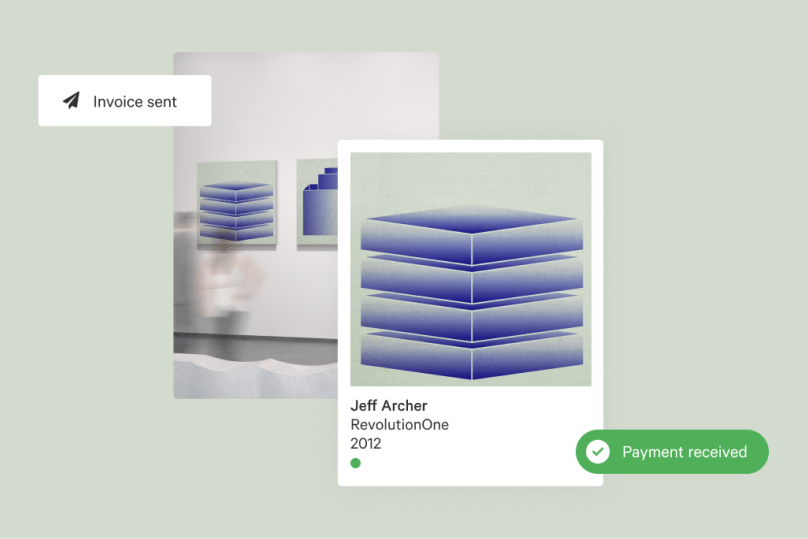
A growing trend is the expectation that websites are fully integrated with back-end systems.
Rather than operating as a standalone platform, the website now connects directly to:
-
Inventory and artwork records
-
CRM and collector data
-
Email marketing tools
This creates a two-way flow of information:
-
Website interactions feed into collector profiles
-
Inventory updates automatically reflect online
-
Engagement data informs future outreach
The result is a more complete view of each collector, and a more efficient workflow for gallery teams.
A Practical Checklist for 2026
For galleries, artists, and art businesses, the following checklist can help evaluate and improve your website:
Structure & Navigation
-
Can visitors reach an artwork in 1–2 clicks?
-
Are artworks searchable and filterable?
-
Are there clear paths from browsing to inquiry?
Content & SEO
-
Do you publish original content beyond artist bios?
-
Are exhibitions and programming visible and detailed?
-
Is content updated regularly?
User Experience
- Does the site load quickly on mobile?
- Are there multiple images per artwork?
- Are related works or suggestions visible?
Conversion
-
Are CTAs visible on artwork and artist pages?
-
Are forms simple and easy to complete?
-
Are there multiple opportunities to engage?
Flexibility
-
Can you easily add new pages or sections?
-
Does your CMS support modular content blocks?
-
Can you test and update layouts without developers?
-
Building a Website That Evolves With Your Business
One of the most important shifts is recognizing that a website is not a fixed asset. It is a living system.
It should evolve alongside your program, your artists, and your collectors. Regular updates, new content, and iterative improvements are no longer optional.
For art businesses, this presents an opportunity: those who invest in thoughtful, adaptable websites will be better positioned to stand out in an increasingly competitive digital landscape.
Join Our Webinar on Website Best Practices
If you’re looking to take a more structured approach to your website, we’ll be exploring these themes in more detail in an upcoming session. Join Artlogic consultant Billy Maker for a live webinar on website best practices for the art world.
How to build websites that work →
Read more
-

3 Features To Love About London Gallery Weekend's Website
A website built to help art lovers plan, navigate and explore the best art in London -
Building a Gallery Brand to Attract Collectors
Why Storytelling and Authenticity Matters -
Gallery + Interview
Why less is more when it comes to photography websites
In conversation with photographer Phil Penman, discussing how using Artlogic changed his studio overnight.